


An AI accountability partner for work helps you keep commitments in view and follow through. The useful question is whether it understands your work—or just asks whether you did it.
If you want AI to “manage you,” you may really want three things: remember what you promised, notice what changed and help you decide where to start.
Written by Sharick’s founder. This guide explains the approach behind our product; it is not a hands-on comparison of accountability apps.
Choose the kind of help you need
These solve different problems. If your main challenge is starting a daily writing habit, a simple check-in may be enough. If you keep losing track of what you owe people, the missing piece is context.
A useful nudge explains why now
Imagine this: you promised Maya a revised proposal after she sent her feedback. Her reply arrived yesterday, but you haven’t returned to the thread.
“Finish the proposal” adds another reminder. A more useful briefing says:
Maya’s feedback is in. You promised a revised proposal after her review. Open her reply, check the changes and decide whether to send the update today.
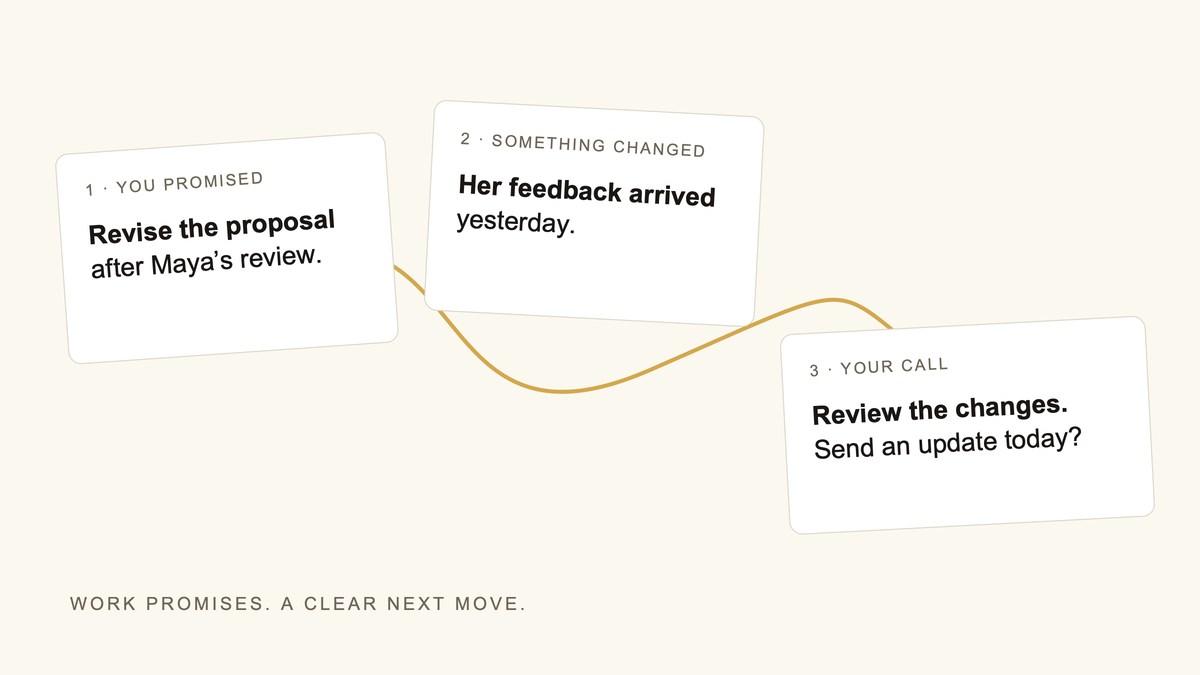
That nudge earns your attention because it connects the promise, the new information and the next move. It should also link to the original conversation so you can check its reasoning.
For practical ways to keep those records, see our guides to email commitment tracking and meeting commitment tracking.
Keep judgment in your hands
Before choosing a work accountability assistant, check four things:
- Context: Can you see the message or meeting behind a suggestion?
- Accuracy: Does it distinguish a request from an agreed commitment?
- Change: Can you correct the owner, date or assumption when plans move?
- Control: Can you review a draft before anything goes out in your name?
More pressure is not always better help. An overdue item may need a new deadline, a conversation or a decision to drop it. An assistant should make that easier to see.
Try it with two real commitments
Sharick helps identify commitments in connected work, brings them into source-linked briefings and prepares follow-up drafts for your review. It gives you context for the next move; you make the call.
Start with one promise you made and one reply you’re waiting for. Check whether you can find the source, understand what changed and choose an action without rereading everything.
See how Sharick’s proactive AI assistant helps →
Sources and limitations
Sources checked October 12, 2026. Pally describes goal-based WhatsApp check-ins; Reclaim describes calendar scheduling for tasks; Follow-Through describes commitment tracking from email. These vendor descriptions illustrate the approaches above, not tested performance or endorsements.
The Maya example is fictional. AI can miss context or infer a commitment incorrectly, so check the source before acting. Sharick’s workflow here does not promise phone coaching, habit enforcement or automatic calendar scheduling.