

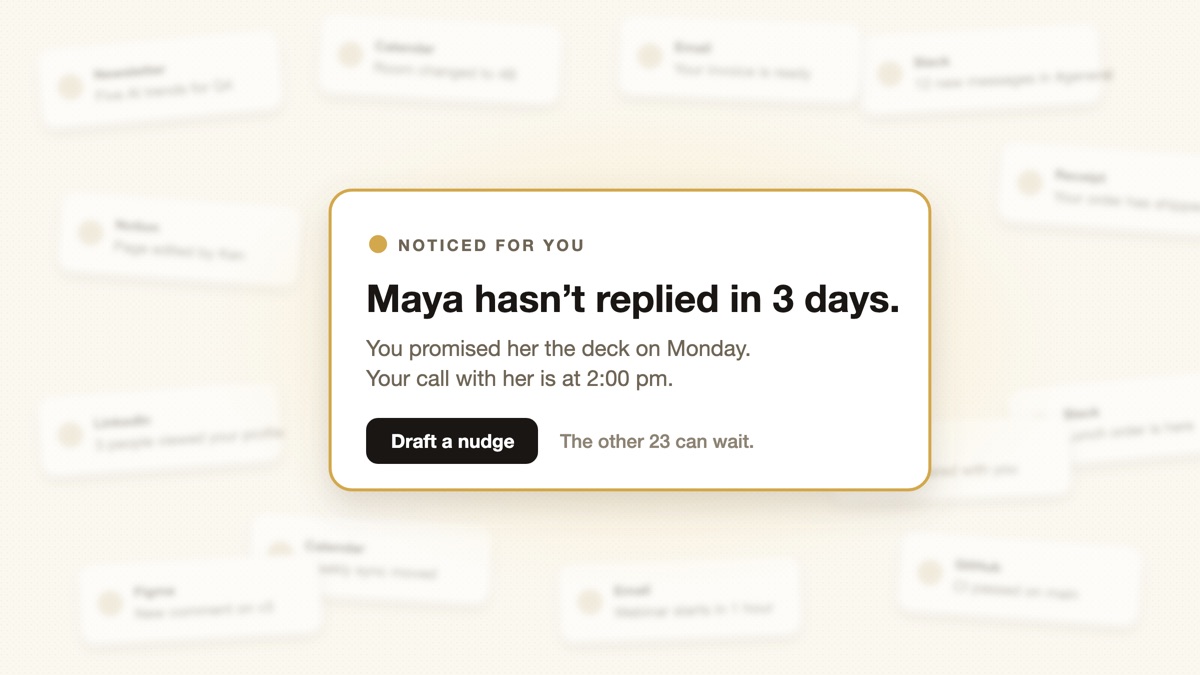
“Proactive” has become the default promise of AI assistants. The assistant goes first: a morning summary, a suggested reply, a reminder you did not set. It is a real improvement over tools that wait for a prompt. But going first is only a question of timing. It says nothing about whether the thing brought to you was worth it.
Anyone who has tried a few proactive tools knows the failure mode. The digest grows longer every week. The suggestions are technically relevant and practically useless. The assistant is busy, and you are still the one paying attention.
What we mean by attentive
An attentive AI assistant notices what matters to you, weighs it against what you are trying to do, and interrupts only when the interruption is worth it. Proactive describes when an assistant acts. Attentive describes how well it chooses.
A good human chief of staff is attentive in exactly this way. They do not forward you everything. They notice that the board member who usually replies in an hour has been silent for three days, and they mention it before your call.
Three habits of an attentive assistant
1. It notices absence, not just activity
Most assistants react to new events: a message arrived, a meeting was booked. Many of the things that matter are non-events: the reply that never came, the task nobody picked up after a meeting, the weekly update that stopped. Noticing absence requires remembering what was expected. That is harder than summarizing what happened, and more valuable.
2. It weighs things against your priorities
Relevance is not the same as importance. An email from a customer is relevant; whether it outranks your fundraise this week depends on what you are trying to do. An attentive assistant holds a working model of your priorities, lets you correct it, and uses it to rank what it brings up.
3. It stays quiet on purpose
The hardest habit is restraint. Every interruption spends your attention, so an attentive assistant treats silence as a decision rather than a gap. When nothing needs you, the right output is nothing, or a short note that says so.
Proactive and attentive, side by side
| Situation | Proactive | Attentive |
|---|---|---|
| Twenty new emails overnight | Summarizes all twenty | Surfaces the two that change today, says the rest can wait |
| A promised reply is three days late | Nothing happened, so nothing to report | Notices the silence and suggests a nudge before your call |
| A deadline moved | Keeps the old reminder | Updates the plan and retires the stale reminder |
| A quiet day | Sends a digest anyway | Tells you nothing needs you |
What attentive does not mean
Attention can sound like surveillance. It should not be. An attentive assistant pays attention on your behalf, to the sources you chose to connect, for purposes you can see. That implies a few commitments: every suggestion traces back to its source, you can correct what it believes about you, and nothing that affects other people happens without your approval. Without those, “attentive” is just a nicer word for watching.
What we are building toward
We build Sharick around this idea. It keeps commitments from meetings and messages linked to their sources, brings open loops into a daily briefing, and lets you correct its understanding. We do not claim to have solved restraint; it is the hardest part and the part we measure ourselves on.
If you are evaluating assistants, try judging them on one question: over a week, were their interruptions worth it? For the practical side, see proactive vs reactive assistants and what a follow-up assistant should track.